
Erie Dissolution Of Marriage Court Records
Erie is Pennsylvania's only city on Lake Erie and the fourth largest city in the state, home to roughly 94,000 people. Erie is the county seat of Erie County, which means city residents have direct courthouse access for all Dissolution Of Marriage filings and record searches. The Erie County Courthouse serves both the city and the wider county. This guide explains how to find and access dissolution records, how to file, and what Pennsylvania law requires for divorce in Erie.
Erie Quick Facts
Filing Dissolution Of Marriage in Erie
Erie residents file for Dissolution Of Marriage at the Erie County Court of Common Pleas. The Erie County Courthouse is located at 140 W. 6th Street in downtown Erie. Because Erie is the county seat, residents of the city and surrounding townships all file at the same courthouse. There is no separate city court for family law matters in Pennsylvania; all dissolution cases go through the county court system.
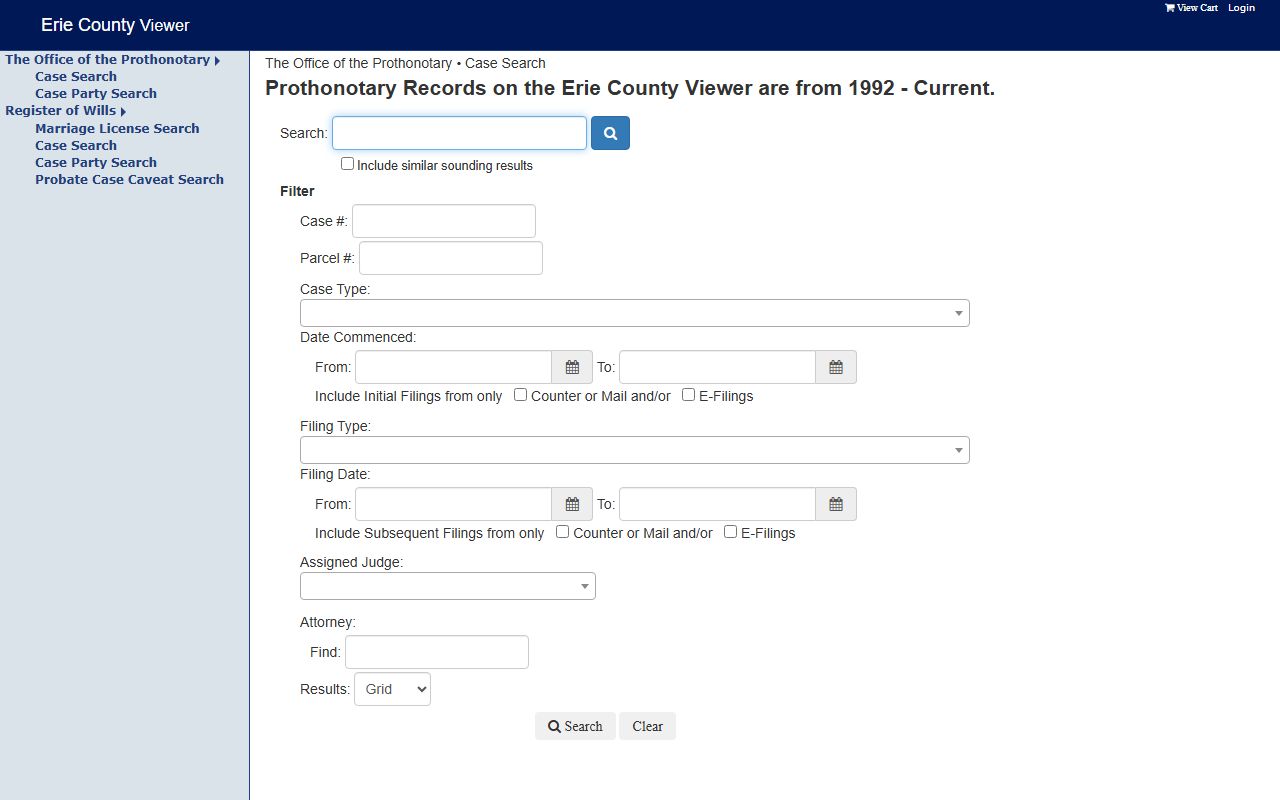
The Erie County Government maintains the court administration and public access functions. The Prothonotary's office at the courthouse accepts new filings, maintains the case index, and issues certified copies of court records. Erie County also provides an online case search tool through courtpro.eriecountypa.gov where the public can search by case number, party name, case type, or filing date.
Under Pennsylvania residency rules at 23 Pa.C.S. § 3103, you must have lived in Pennsylvania for at least six months before filing for dissolution of marriage. Erie residents who meet that requirement file their cases in Erie County.
| Court | Erie County Court of Common Pleas |
|---|---|
| Address | 140 W. 6th Street, Erie, PA 16501 |
| Phone | (814) 451-6000 |
| Hours | Monday through Friday, 8:30 AM to 4:30 PM |
| Website | Erie County Prothonotary Case Search |
Note: The Pennsylvania Courts Erie County page provides current information about local court rules, judge assignments, and administrative contacts for the Court of Common Pleas.
Searching Erie County Dissolution Records Online
Erie County provides a dedicated online portal for public case searches. The Erie County Prothonotary Case Search at courtpro.eriecountypa.gov lets you search by case number, the name of either party, the case type, or the filing date. This tool covers civil cases including dissolution of marriage. It is free to use and available around the clock.
The statewide Pennsylvania Unified Judicial System portal also includes Erie County records and covers all 67 counties in the state. If you are searching for a case and are not certain it was filed in Erie County, the UJS portal can help you check multiple counties at once. Both portals are free and do not require registration to search.
The CountyOffice.org Pennsylvania divorce records page provides additional search options and public record resources for Erie and other Pennsylvania counties.
For certified copies of documents in the case file, you must contact the Prothonotary's office directly. Bring a valid photo ID and the case number or the full names of both parties if you plan to visit in person. Written requests are also accepted by mail. Include a check or money order for the copy fees along with the case information.
The Erie County case search portal gives direct access to current and recent dissolution records filed in the county.
Erie County has maintained court records in the Prothonotary's office since 1804, when state law established the requirement for counties to preserve all divorce decrees.
Grounds for Dissolution Of Marriage Under Pennsylvania Law
Pennsylvania law at 23 Pa.C.S. § 3301 sets out both fault and no-fault grounds for dissolution of marriage. Erie residents filing for divorce must choose one of the recognized grounds when they submit their complaint to the court.
No-fault divorce is the most common choice. It comes in two forms. Mutual consent requires both spouses to sign affidavits agreeing to the dissolution after a 90-day waiting period. This is the fastest path when both parties cooperate. The second no-fault option is based on separation. Since December 5, 2016, the required separation period is one year. If one spouse does not agree to the divorce, the other can still proceed after living apart for that full year.
Fault grounds are still available under Pennsylvania law and include willful desertion for at least one year, adultery, cruel and barbarous treatment that endangers the life or health of the other spouse, bigamy, imprisonment for two or more years following a criminal conviction, and indignities that make the condition of the other spouse intolerable. Fault cases require more documentation and court time than no-fault cases.
Erie's Presque Isle State Park draws millions of visitors every year, and the city's waterfront economy has shaped the community for generations. That same long history applies to the local court system, which has handled family law matters since Erie County was established.
Note: The jurisdiction provisions at 23 Pa.C.S. § 3104 confirm that Erie County Court of Common Pleas has authority over dissolution cases for city and county residents who meet the six-month residency requirement.
Property Division and Record Details in Erie Cases
Pennsylvania uses equitable distribution for marital property. The rules are set out at 23 Pa.C.S. § 3502. Courts look at the length of the marriage, the age and health of both spouses, each person's income and earning ability, contributions to the marital estate, and other relevant factors. Equitable distribution means fair, not necessarily equal.
Many couples in Erie choose to negotiate a property settlement agreement before going before the court. When that agreement is submitted as part of the dissolution filing, it becomes part of the court record. The public may access that record through the case search portal or by visiting the Prothonotary's office.
Dissolution records under 65 P.S. § 67.101, Pennsylvania's Right-to-Know Law, are generally public. Some records may be sealed by court order, but that is not common in routine cases. The public file typically includes the petition, any affidavits or consent forms, property agreements, custody orders, and the signed final decree.
If you need a state-level divorce certificate rather than a court copy, contact the Pennsylvania Department of Health Vital Records. Certified state certificates cost $20 each and are mailed to the address you provide. You can also order through VitalChek online.
The Pennsylvania Legal Aid Network serves Erie residents who need free or low-cost legal help. Legal aid can help with forms, court procedure, and in some cases direct representation in court for those who qualify based on income.
The Pennsylvania Legal Aid Network provides free guidance for qualifying residents navigating the dissolution process in Erie County.

Legal aid resources in Erie help residents understand their rights under Pennsylvania family law without the cost of private counsel.
Erie County Divorce Records
Erie residents file all Dissolution Of Marriage cases at the Erie County Courthouse at 140 W. 6th Street in Erie, where the Prothonotary's office maintains the full index of divorce and dissolution records for the county.
Nearby Pennsylvania Cities
Other Pennsylvania cities each file dissolution of marriage cases at their county courthouse. Use these links to find records for nearby areas.